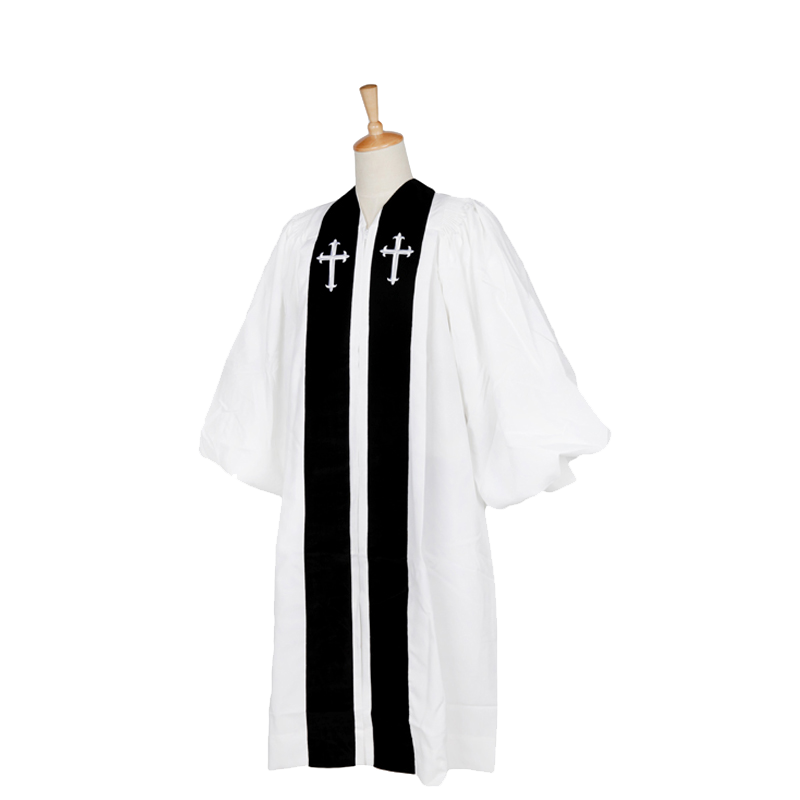
clergy robes
Clergy robes represent a fundamental component of religious attire, serving both ceremonial and spiritual purposes across various faith traditions. These garments embody centuries of ecclesiastical tradition while providing practical functionality for religious practitioners and clergy members.
Clerical robes are specifically designed to distinguish ordained individuals during religious services, processions, and formal occasions. The primary function of clergy robes is to signify spiritual authority and create a visible connection between the wearer and their religious community. Beyond symbolism, clergy robes serve practical purposes by providing comfortable coverage during extended religious ceremonies and services.
Modern clergy robes incorporate thoughtful design features that enhance their utility. High-quality fabrics ensure durability and maintain their appearance through frequent wear and cleaning. The construction of clergy robes typically includes reinforced seams and careful stitching to withstand regular use in religious environments. Many contemporary designs feature adjustable closures and sizing options to accommodate various body types comfortably.
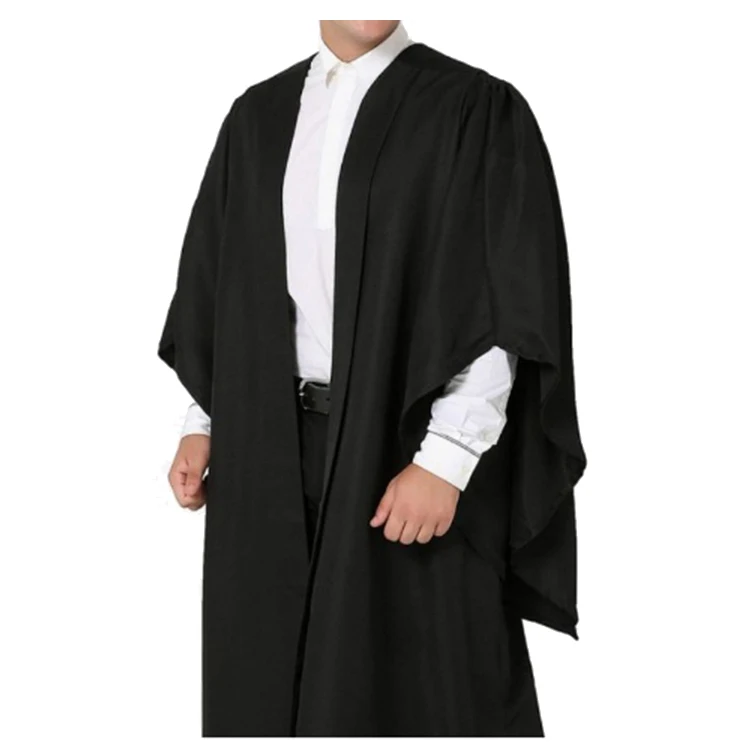
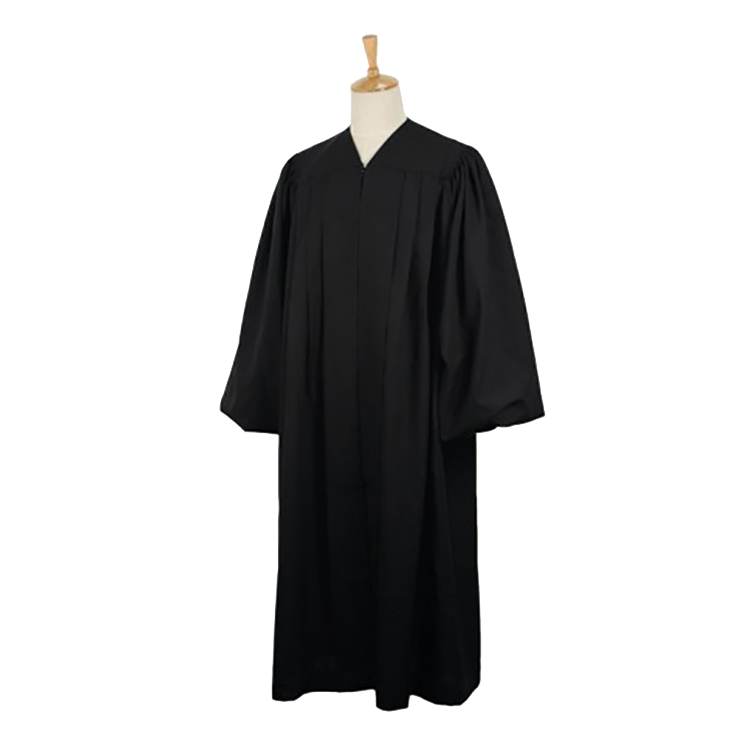
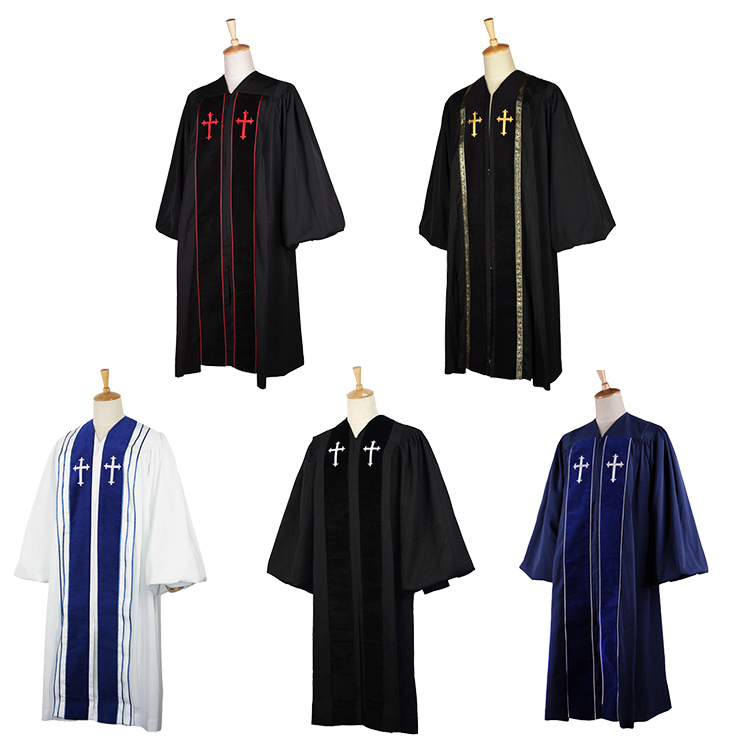
Clerical robes are available in multiple styles reflecting different religious traditions and denominations. Traditional black remains the most common color, though variations exist depending on specific religious practices. The design of clergy robes often includes distinctive elements such as decorative collars, sleeve variations, or embellishments that identify particular ranks or positions within religious hierarchies.
These robes find application in churches, cathedrals, temples, and other worship spaces worldwide. Clergy robes are worn during regular services, special celebrations, religious ceremonies, and formal gatherings. The versatility of clergy robes makes them essential garments for anyone in ordained or ministerial positions seeking to maintain traditional religious practices.
 EN
EN